
Property abroad? Start with a plan, not a property.
Most people who look offshore start with a listing. Scott Picken has invested in property since 1999, in more than one country, and his first lesson is always the same: get clear on your plan, your numbers and your partners before you look at a single building. Learn how, free, inside Wealth University.
Free · no card needed · financial education only, not advice
SYou’ll join the free Wealth University community on Skool.
- Countries and currencies
- Partners first
- Questions to ask
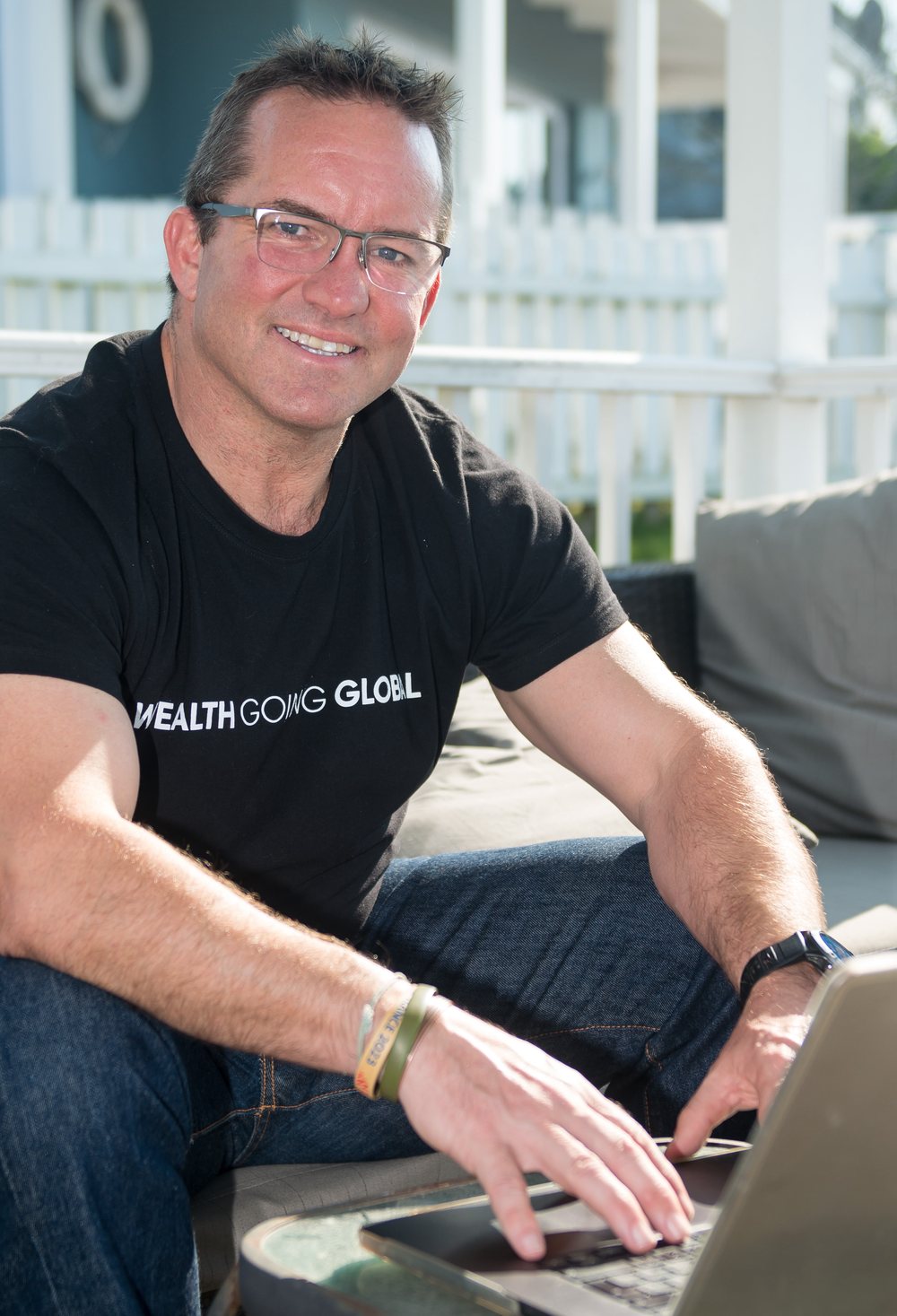
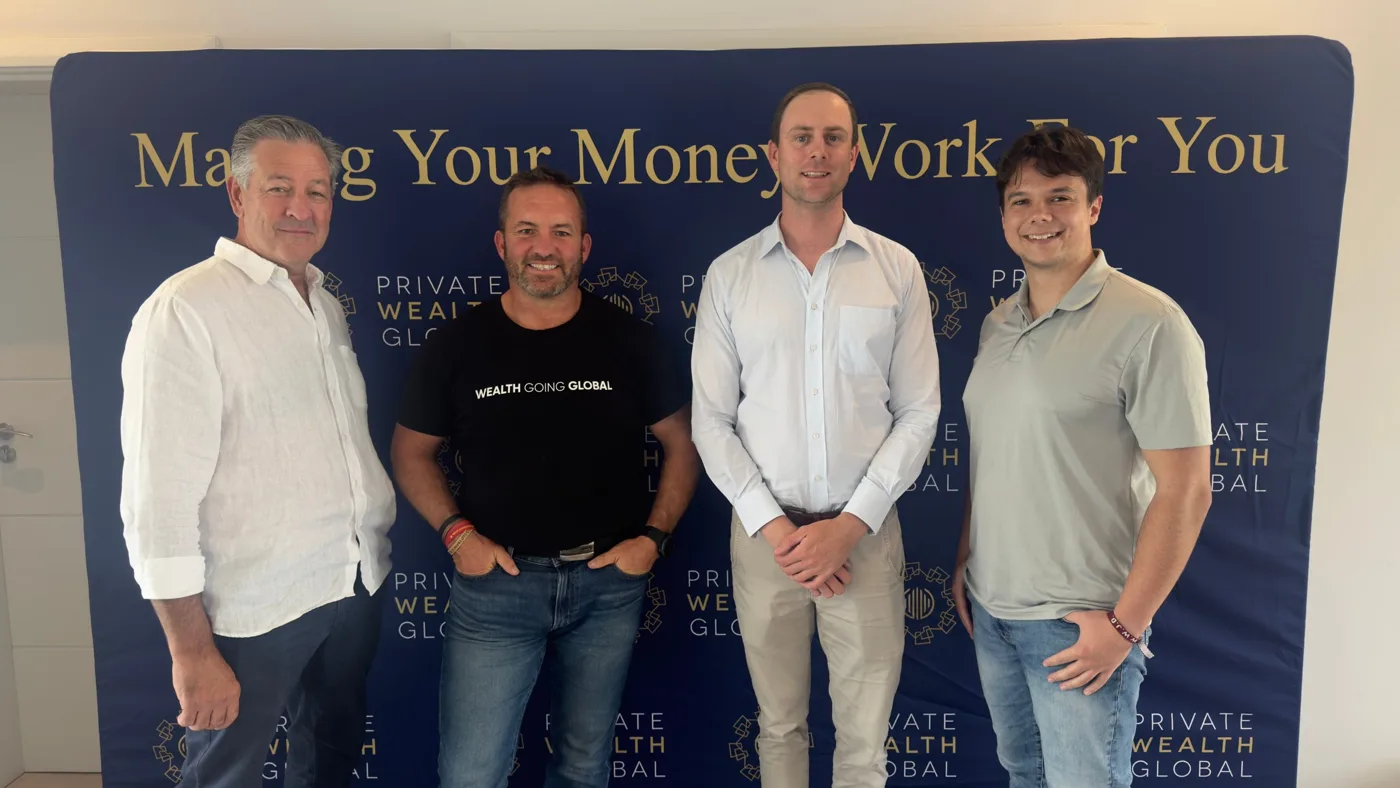 The team behind the familiesScott, Garth, Anthony and Alex
- The Wealth EQ teamWealth EQ and the core wealth pillars
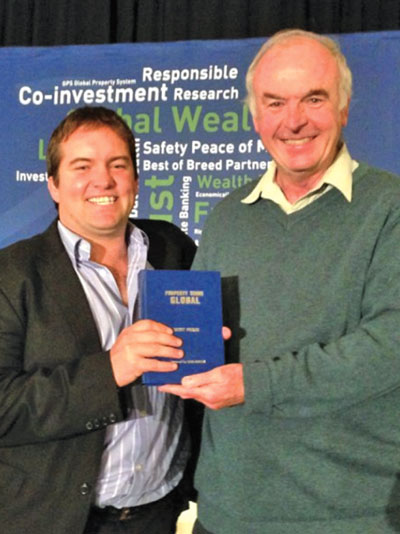 Clem SunterWrote the foreword to Scott’s book
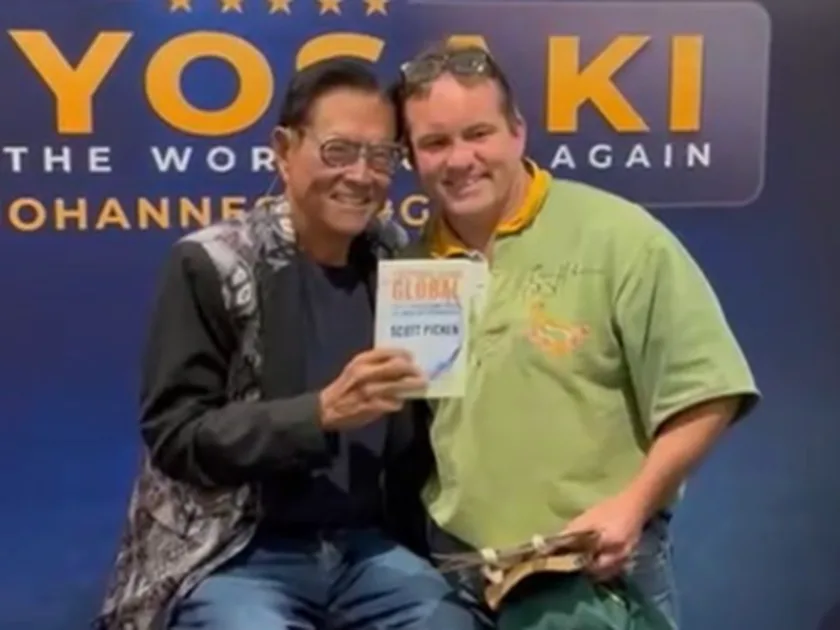 Robert KiyosakiHolding Scott’s book
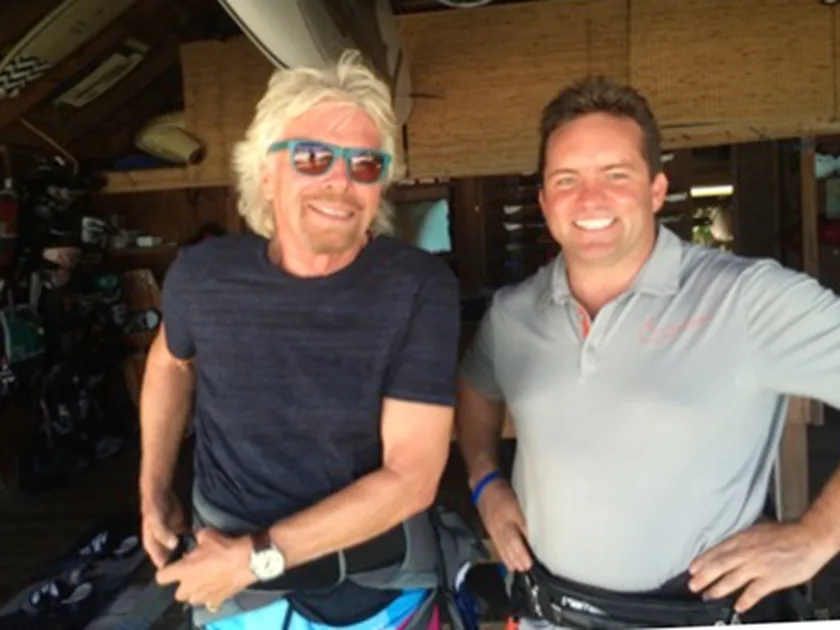 Richard BransonWith Scott on Necker Island
Your home, your income and your savings may all sit in one place.
- Everything I own is tied to one country and one currency.
- I'd like to own property overseas, but I don't know where to start.
- I don't know who to trust on the other side of the world.
- I've heard the stories of people who bought abroad and got burnt.
Property is a wonderful asset. It is one asset. A global plan spreads your wealth across countries, currencies, assets, partners and time.The idea behind Property Going Global
Where your wealth sits
Today: one home, one country, one currency.Illustrative
Six lessons from investing in property across borders
Prices, rules and markets change. These principles haven't. They are the backbone of how Scott teaches global property today.
- 01
Partners before property
A building is only as good as the people looking after it. Choose who you work with on the ground first, then what you buy.
- 02
Income first
Ask what a property earns after every cost, tax and fee before you ask what it might be worth one day.
- 03
Information and partners
Offshore, you can't drive past at the weekend. Good information and trusted partners are what let you invest from a distance.
- 04
You're buying a currency too
When you buy abroad, you take on that country's currency as well as the building. Understand both, and how they fit with the rest of what you own.
- 05
Follow fundamentals, not headlines
Jobs, transport, population and long-term trends shape a market over decades. Think in decades, and let the fundamentals guide where you look.
- 06
Learn from the mistakes
Scott shares his own: rushing to meet a deadline, relying on one developer or operator, buying what hadn't been checked. Spread your risk and slow down.
The book started with property. Wealth Going Global takes it worldwide.
Property Going Global (2013) taught how to own property across borders. Wealth Going Global, Scott's course today, grew those ideas into six pillars for your whole wealth, not just property. Pick a pillar to see then and now.
Think globally. Act locally.
The book is built on a few ideas that still run through Wealth Going Global today. Here they are in plain language.
A global view, local hands
Look at the whole world when you decide where your wealth should sit, so one economy or one currency can't decide your future. Then work with trusted local people who are on the ground where you invest.
Measure wealth in what you'll spend
Your money isn't only worth what it buys at home. The book measures wealth against global costs: a family holiday abroad, an international school, a university overseas, a move to another country. If your home currency loses ground, your wealth shrinks against those goals, even when the numbers at home look fine.
Stay flexible
Borrowed from scenario planning: a hedgehog bets everything on one view of the future; a fox prepares for several and changes course as the signs change. The book asks investors to be foxes.
Four questions before you choose a market
The book's model layers four views of a decision, so emotion takes a back seat. Tap each one.
- 1The worldWhich global scenarios could play out, and how likely is each?
- 2Asset classesProperty, shares, cash or business: how does each behave in those scenarios?
- 3Home countryWhat could happen where you live now, and how much should stay local?
- 4Property fundamentalsEconomic risk, price against the cost of rebuilding, population and supply, and the rule of law.
In 2013 the book scored markets with two tools built on this model, a Probability Calculator and a Global Property System. The scores themselves are out of date; the questions are not.
Don't predict the future. Prepare for several.
The book's foreword is by Clem Sunter, the scenario planner, and his method runs through it. Instead of guessing one future, you plan for a few and watch for the signs of which one is arriving.
- Write a few scenariosPlausible futures for the world and for your home country, not one forecast.
- Choose your flagsSigns you can watch that show which scenario is unfolding: interest rates, jobs, policy, the strength of institutions.
- Weigh the oddsGive each scenario a rough likelihood, and move it as flags go up or come down.
- Have a plan for eachDecide in advance what you'd do in each scenario, so you act on signals rather than headlines or fear.
Then (2013 book): four global scenarios (Hard Times, Ultra-Violet, New Balls Please, Forked Lightning) and three for South Africa.
Now (Wealth Going Global, Clem Sunter's 2025 update): four global scenarios, Friendly Planet, Gilded Cage, Divided Acceleration and Stagnant Stability, and four for South Africa. Some of the global flags he asks people to watch:
Scenarios are named here to show the method. They aren't forecasts, and we don't attach odds to them.
Try it: raise a flag
A made-up example to show how the method works. It says nothing about the real world today.
Start by raising a flag. Watch how the odds move between the three made-up scenarios.
Property is one asset class of fifteen.
The 2013 book was about property. Wealth Going Global looks at every asset class, rules out the ones that don't fit, and sets your wealth up for time.
The eight golden rules: what to avoid
- Too complicatedAnything you'd need an expert to explain to you.
- No incomePure speculation that pays nothing along the way.
- Short-term and high maintenanceVolatile, hands-on bets that need constant attention.
- Over-engineeredStructures you don't understand.
- OvercrowdedMarkets everyone is already piling into.
- No reliable informationWhere you can't get honest, objective data.
- No partners you trustWhere nobody reputable is on the ground with you.
- Countries you don't understandWhere the law, language or rules are a mystery to you.
The fifteen asset classes
Tap any asset class to see what it is and what to watch for. Property is where this site started: important, and only one part of the picture.
A list to learn from, not a list of recommendations.
The bucket strategy
Split your wealth by when you'll need it. Income comes from the near bucket, so long-term growth isn't sold in a bad year.
Illustrative. The right split depends on your own numbers and timing.
Eight questions to answer first
Tick each one you could answer today for a property you're looking at. The gaps show you what to learn next.
These questions are for your own learning. They aren't advice, and they aren't a check we do for you.
Your global plan, on one page.
Wealth Going Global starts with the Lighthouse idea: decide where you want to end up first, then build the plan around it, instead of squeezing yourself into a ready-made product.
- 1Your whyFive reasons financial freedom matters to you, written on your one-page Wealth Plan.
- 2Your strategy sheetYour chosen countries, currencies, assets, partners and time horizon, all on one page.
- 3Your next stepOne action, with a date, that you'll take this month.
Where it started: Property Going Global
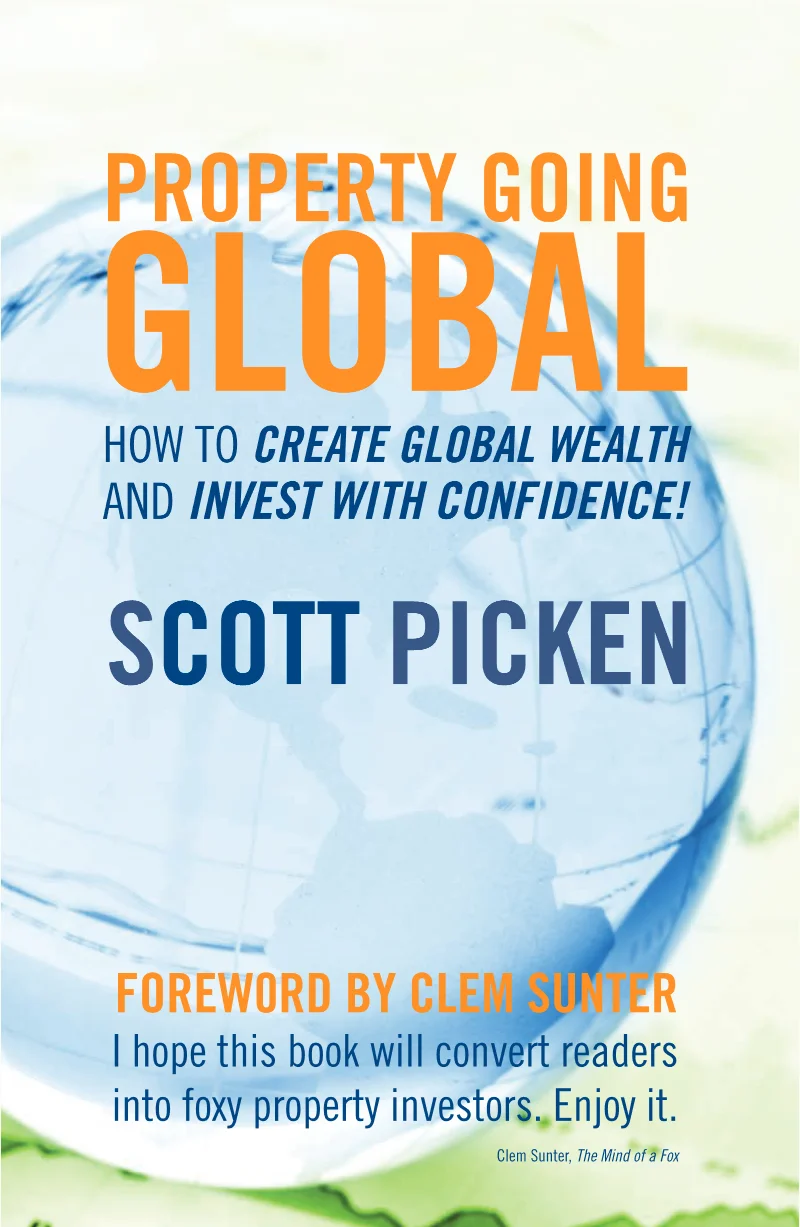
Scott wrote Property Going Global in 2013 to share what he had learnt helping people buy property in other countries.
Markets, prices, rules and partners have changed a great deal since then, so we don't treat the figures in the book as current. The principles have lasted. Scott teaches them, kept up to date, inside Wealth University, alongside the rest of a global wealth plan.
- First published 2013
- By Scott Picken
- Foreword by Clem Sunter
- 14 chapters
See what each chapter covers →
Looking for the 2013 edition? It isn't sold on this site. Join Wealth University free for the up-to-date lessons, and ask the team about the book there.
Chapter by chapter
What each chapter covers, and what still holds today. We've left out the 2013 prices, yields, forecasts and rules, because they've changed.
IntroForeword and introduction
Clem Sunter's foreword introduces scenarios, flags and probabilities as a way to make property decisions without guesswork. Scott tells his founder story and how his family's experience shaped his focus on long-term wealth.
Still holds: judge property on the income it earns, not on hoped-for growth, and prepare for more than one future.
Ch 1Glocalisation
Thinking globally and acting locally to deal with economic uncertainty and currency swings, using scenarios and flags, and building a back-up plan for your wealth.
Still holds: watch the flags, keep a plan B, and keep some of your wealth in stable assets outside one economy.
Ch 2Understanding currency rates and values
How a weakening currency erodes what your money can buy over time, how fear and greed drive short-term swings, and the Global Wealth Index as a way to measure wealth against global costs.
Still holds: make currency decisions from long-term patterns, not emotion, and don't keep everything in one currency.
Ch 3The ten biggest property trends and lessons
Lessons from years of international property: practice and structured learning, the shift from choosing a building to choosing a team, buying together, the early days of property crowdfunding, and income strategies versus speculation.
Still holds: find trustworthy local partners before the property, and build for rental income that lasts through cycles.
Ch 4Clem Sunter's scenarios for South Africa
The South African scenarios of the time and the flags behind them, such as youth unemployment, strong institutions and consistent policy, with ways for families and businesses to reduce home-country risk.
Still holds: whatever country you live in, watch its flags and keep part of your wealth elsewhere as a safety net.
Ch 5The four-dimensional investment model
A model that combines global scenarios, asset classes, your home country's outlook and property fundamentals, and the Probability Calculator and Global Property System built on it to compare markets.
Still holds: check economic risk, price against the cost of rebuilding, population and supply, and the rule of law, and compare markets with the same yardstick.
Ch 6The USA, Australia and the UK compared
A side-by-side look at three developed markets, and the difference between prime, secondary and tertiary locations in a city.
Still holds: look at well-connected suburbs where ordinary working families want to rent, and be wary of areas where high "paper" returns come with empty months and hard management.
Ch 7The United States
How buying works in the US for a foreign investor: regional differences, checks before buying, legal set-up, property management and tax, and how markets reset after a crash.
Still holds: buy at or below the cost of rebuilding, where landlords are protected, and use one accountable team for finding, fixing and managing.
Ch 8Australia
The Australian market: its regulation and banks, foreign-buyer rules, house-and-land packages, planned growth areas and city-by-city cycles.
Still holds: follow long-term city plans and infrastructure, and use good management and sensible leases.
Ch 9United Kingdom
The UK market with a focus on London: supply and demand, what tenants want, and big cities compared with regional ones.
Still holds: the "ten-minute rule" (a short walk to good transport), and paying for layouts tenants value rather than looks.
Ch 10Residency, green cards, passports and immigration
Residency and citizenship-by-investment schemes in several countries, and why property sold mainly to win a visa is often a lifestyle purchase rather than an investment.
Still holds: keep residency goals and investment decisions separate, and judge any property on its own fundamentals. The rules have changed a lot since 2013; take independent advice.
Ch 11Other markets
Brief reviews of markets in Europe, Asia, Latin America and Africa against tenant law, oversupply, rent controls and economic stability.
Still holds: avoid places where the law doesn't protect owners, and look for demand from a growing local middle class rather than tourism.
Ch 12Further tools
Checklists for investors: rules for building wealth, question banks for vetting opportunities and partners, checking rental demand, and a step-by-step guide to a buying trip.
Still holds: keep learning, build a network of good local professionals, and check every partner's history, local presence and after-sales service.
Ch 13Mistakes I have made and what I learnt
Scott's own mistakes: buying off-plan, partners whose interests weren't aligned, weak financial controls, and splitting the buying from the managing.
Still holds: never rely on someone else's brand for your checks, and make sure whoever sells you the property also has a stake in managing it well.
Ch 14Further information
The book's overall philosophy, and why research has to be kept up to date as markets change.
Still holds: treat any model as a living tool, and learn alongside others. That's what Wealth University is for.
Every property decision has two conversations
One happens on the spreadsheet. The other happens quietly in your head. Most costly mistakes come from hearing only one of them. Good decisions notice both.
- AConversation one
The spreadsheet
The numbers you can check.
Total cost to buy, hold and sellCurrency you earn in, borrow in and spend inTax where the property is, and where you liveWho manages it when you are not there - BConversation two
The human side
The feelings that quietly steer the numbers.
Fear of missing out, or fear of the unfamiliarStatus and what others will thinkWhat your family expects, or needsThe story you tell yourself about a place
Moving or investing abroad? A readiness checklist
Legal status and residency
What visa or residency you need to live, work or simply own property there, and how long it takes. Check the official government source.
Tax residency
Where you are taxed when you live in one country and own in another, and whether a tax treaty applies between them.
Banking and credit history
Opening local accounts, moving money legally and building a credit history in a new country, which often starts from zero.
Currency
What happens when you earn in one currency, borrow in another and spend in a third. Currency moves can matter as much as the price.
Healthcare and insurance
Cover for you and your family in the new country, and cover for the property itself.
Documents
Passports, certified copies, title deeds and a will that is valid in each country where you own assets.
Family
Schooling, ageing parents, and who makes decisions if you cannot. Talk about it before you sign.
The adjustment curve
Moving countries usually brings excitement, then frustration, then homesickness, then adaptation. Knowing the stages are normal makes them easier.
General education only. This is not financial, tax, legal or immigration advice. Speak to a qualified professional about your own situation.
Scott Picken, The Wealth Architect
Scott started on London building sites, started investing in property in 1999 and has spent his career helping people think globally about their wealth.
Today he leads Wealth University, Wealth Hackers and Private Wealth Global, teaching business owners and professionals to make their money work harder for them.
- 1998Construction management degree, University of Cape Town
- 1999Started investing in property
- 2004Founded International Property Solutions in London
- 2013Wrote Property Going Global
Entrepreneur. Father. Adventurer.
Scott lives in Knysna, on South Africa's Garden Route. He has spent nearly three decades building businesses across borders, and some of his biggest lessons came from outside the boardroom.
“Most successful people don’t have an income problem. They have an architecture problem.”Earning well isn’t the same as being wealthy. What matters is how your money is set up to work for you.SCOTT PICKEN
Happiest in the ocean
Surfing and kite surfing are how Scott stays present. The ocean is where he resets.
Family and legacy
Scott calls his son his greatest legacy, and wants to build a life his son can be proud of.
Rebuilt, not perfect
Growth brought hard lessons, in business and at home. Scott took the time to reflect and rebuild, and came back a more present father and leader.
- Surfing
- Kite surfing
- Cycling
- Rugby
- Skiing
- Padel
What guides himFreedom · Purpose · Family · Courage · Integrity · Learning
Property is one step. Here's the whole path.
Property Going Global is part of Wealth University. Everyone is heading to the same place, investor freedom, at their own speed. You start free.
- You start hereStart
Wealth University
Learn the language of wealth and find out where you stand.
FreeVisit Wealth University → - Walk
Wealth Hackers
Your one-page global wealth plan, one practical step a week and Scott live every Friday.
US$27 a month or US$197 a yearVisit Wealth Hackers → - Drive
Wealth Accelerator
90 days to install your personal wealth system, in a small group.
Coming in 2027 - Fly
Private Wealth Global
A private wealth team behind you: our mastermind and family office programme.
By application
Good to know
Anything else? Ask inside the community. Scott and the team are there.
Will you sell me a property?
No. Property Going Global and Wealth University are financial education. We teach principles and help you build your own plan. You decide if, when and where to invest.
Is the 2013 book still available?
It isn't sold on this site. Many of its figures and rules are out of date, so the lessons are taught, kept current, inside Wealth University instead.
Who is Clem Sunter?
Clem Sunter is a scenario planner who wrote the foreword to Property Going Global in 2013. His method of scenarios, flags and probabilities runs through the book, and we credit it here. Mentioning him doesn't mean he endorses Wealth University.
What does it cost to join?
Wealth University is free to join, with no card needed. If you later want more structure, Wealth Hackers is US$27 a month or US$197 a year.
Is this financial advice?
No. For personal advice on tax, law or investments, speak to an independent, licensed adviser in your country.
I'm not in South Africa. Is this for me?
Yes. Members join from around the world, and the principles are global: countries, currencies, assets, partners and time.
Go global with a plan, not a guess.
Join Wealth University free. Learn the principles behind Property Going Global, find out where you stand and start your own global wealth plan.
Join the Wealth University communityFree · no card needed · financial education only
Join Wealth University
Free, and takes under a minute. We'll connect you to the community straight after.
You're in, friend.
One last step: join the group on Skool, where the community, classroom and calendar live.
- Tap the button below to open Wealth University on Skool.
- Tap Join group and sign up with the same email.
- Head to Start Here and take your first step.
Preview mode: your details were not sent anywhere. On the live page they go to the CRM first.